How I Learned to Breathe Through the Storm: My Real Journey with Anxiety Relief
Anxiety doesn’t shout—it whispers, then overwhelms. For years, I felt trapped in my own mind, until I discovered small, science-backed shifts that changed everything. This isn’t about quick fixes, but real, daily rehabilitation methods that build resilience. If you’ve ever felt stuck in the cycle of worry, this is for you—practical, personal, and rooted in what actually works.
The Hidden Weight of Anxiety
Anxiety is often misunderstood as simply nervousness or occasional stress, but for many, it is a persistent undercurrent that colors every decision, interaction, and moment of stillness. It is not always dramatic panic attacks or visible distress. More often, it appears as a low hum of unease—a constant tension in the shoulders, a racing mind at bedtime, or the inability to sit with silence without feeling the urge to check a phone or distract oneself. This quiet but unrelenting presence can wear down mental and physical well-being over time, making even routine tasks feel overwhelming.
Chronic anxiety does more than affect mood. It triggers a prolonged activation of the body’s stress response, flooding the system with cortisol and adrenaline. When this state becomes the norm, it can impair digestion, weaken immune function, disrupt sleep architecture, and reduce cognitive clarity. Studies have shown that long-term anxiety is linked to increased risk of cardiovascular issues, gastrointestinal disorders, and chronic fatigue. Treating anxiety as “just stress” overlooks its deep physiological impact and delays meaningful intervention. It’s not a character flaw or a sign of weakness—it’s a signal that the nervous system is out of balance.
For many women in their 30s to 50s, anxiety often surfaces in the context of multiple responsibilities—managing households, caring for children or aging parents, navigating career expectations, and maintaining relationships. The pressure to “do it all” can amplify feelings of inadequacy or fear of failure. Simple scenarios become sources of intense worry: replaying a conversation to analyze tone, hesitating to send an email for fear of miscommunication, or declining social invitations to avoid potential discomfort. These are not signs of overreaction—they are reflections of a mind trained to anticipate danger, even when none is present.
Why Traditional Advice Falls Short
When someone is struggling with anxiety, well-meaning friends or family often offer familiar reassurances: “Just breathe,” “Don’t worry so much,” or “Stay positive.” While these suggestions come from care, they rarely provide real relief. The issue isn’t a lack of effort or attitude—it’s a misunderstanding of how anxiety operates. The anxious mind isn’t choosing to spiral; it’s responding to perceived threats with a survival mechanism designed to protect, not to reason. Telling someone to “think differently” without equipping them with tools to regulate their nervous system is like asking a person with a sprained ankle to run a race without treatment.
Willpower alone cannot override a nervous system stuck in fight-or-flight mode. In this state, the prefrontal cortex—the part of the brain responsible for logic, planning, and emotional regulation—becomes less active, while the amygdala, which processes fear, becomes hyperactive. This neurological shift makes it nearly impossible to “talk oneself out” of anxiety using sheer determination. The body feels danger, even when the mind knows there is none. This disconnect is why so many feel frustrated or broken when traditional advice fails them.
Instead of suppression, what is needed is rehabilitation. Just as physical therapy rebuilds strength and coordination after an injury, mental and emotional recovery requires consistent, structured practice. The goal is not to eliminate anxiety entirely—which is a natural and sometimes helpful emotion—but to recalibrate the system so it responds proportionally to real challenges rather than reacting to imagined ones. This process takes time, patience, and repetition, but it is possible. The brain is neuroplastic, meaning it can form new patterns when given the right input over time. The path forward is not about quick wins, but about building sustainable habits that retrain the body’s response to stress.
Breath as Your First Line of Defense
Among the most powerful and accessible tools for managing anxiety is the breath. Unlike other physiological functions, breathing sits at the intersection of voluntary and involuntary control, making it a unique bridge between mind and body. When anxiety arises, the breath often becomes shallow and rapid, reinforcing the body’s sense of emergency. By consciously altering breathing patterns, it is possible to send a direct signal to the brain that safety has returned. This is not metaphorical—it is rooted in the physiology of the vagus nerve, a key component of the parasympathetic nervous system responsible for “rest and digest” functions.
Diaphragmatic breathing, also known as belly breathing, activates the vagus nerve and helps shift the body out of survival mode. When the diaphragm moves fully, it massages the internal organs and stimulates the nerve, triggering a cascade of calming effects: heart rate slows, blood pressure lowers, and mental clarity improves. This is not a relaxation technique in the vague sense—it is a biological intervention. Research has shown that slow, deep breathing can reduce cortisol levels and increase heart rate variability, a marker of resilience and emotional regulation.
One effective method is the 4-6-8 breathing technique: inhale through the nose for four seconds, hold the breath for six seconds, and exhale slowly through the mouth for eight seconds. This pattern extends the exhalation, which is particularly effective in activating the parasympathetic response. The extended out-breath mimics the natural slowing of respiration during sleep or relaxation, signaling to the brain that there is no immediate threat. Practicing this for just five minutes can significantly reduce feelings of tension and mental fog.
Integrating breathwork into daily life does not require large time commitments. Starting with two five-minute sessions—one in the morning and one before bed—can create a foundation of calm. To support consistency, pair the practice with an existing habit: after brushing teeth, while waiting for coffee to brew, or during the first few minutes of lunch. Using gentle reminders, such as a sticky note on the mirror or a calendar alert, can help maintain momentum. Over time, this practice becomes less of a “technique” and more of a natural rhythm, a quiet anchor in the midst of life’s storms.
Movement That Soothes, Not Punishes
In conversations about mental health, physical activity is often recommended, but the type of movement matters greatly. While vigorous exercise can boost endorphins, it is not always the best choice for someone in a state of chronic anxiety. Intense workouts can sometimes mimic the physiological symptoms of anxiety—elevated heart rate, sweating, shortness of breath—and inadvertently reinforce the body’s stress response. For many, the idea of pushing through discomfort feels counterintuitive when the nervous system is already overstimulated. The goal is not to exhaust the body, but to reconnect with it in a gentle, supportive way.
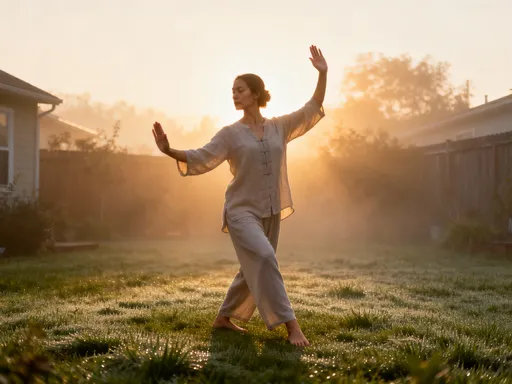
Gentle, rhythmic movement offers a different path. Activities like walking in nature, practicing tai chi, or engaging in mindful stretching help regulate the nervous system by promoting body awareness and reducing mental chatter. These forms of motion are not about performance or achievement—they are about presence. When the body moves with intention and awareness, it sends feedback to the brain that all is well. This process, known as interoception, strengthens the connection between physical sensation and emotional state, allowing for greater self-regulation.
Walking, especially in green spaces, has been shown to lower cortisol levels and improve mood. The repetitive motion of stepping, combined with the sensory input of fresh air, birdsong, and natural light, creates a soothing rhythm that calms the mind. Even a 15-minute walk around the neighborhood can serve as a reset during a stressful day. The key is to move slowly enough to notice the body—the feeling of feet on the ground, the swing of the arms, the rise and fall of the breath. This mindful attention shifts focus away from rumination and into the present moment.
Tai chi and qigong, ancient practices rooted in Chinese tradition, are particularly effective for anxiety relief. These disciplines combine slow, flowing movements with coordinated breathing and mental focus. Studies have found that regular practice can reduce symptoms of anxiety and improve sleep quality. Similarly, gentle yoga or stretching routines that emphasize breath and body awareness can release stored tension, especially in areas like the neck, shoulders, and hips where stress often accumulates. The emphasis is not on flexibility or intensity, but on listening to the body and honoring its limits.
Rewiring Thoughts with Cognitive Reframing
Anxiety is not just a physical experience—it is deeply intertwined with thought patterns. The mind, in its effort to protect, often jumps to worst-case scenarios, assuming the most negative interpretation of events. These mental habits, known as cognitive distortions, are not lies, but exaggerations of possibility. They feel real because they are emotionally charged, but they are not always accurate. Recognizing these patterns is the first step toward changing them. This is not about denying emotions or forcing positivity, but about introducing balance and perspective.
One common distortion is catastrophizing—imagining the worst possible outcome as if it were inevitable. For example, a delayed text response might trigger thoughts like, “They’re ignoring me,” “I must have said something wrong,” or “They don’t care about me anymore.” Another is mind-reading—assuming knowledge of others’ thoughts without evidence. These thoughts feel urgent and convincing, but they are based on assumptions, not facts. The goal is not to eliminate them entirely, but to learn to observe them without immediately believing them.
Cognitive reframing involves gently challenging these thoughts and replacing them with more balanced alternatives. For instance, instead of “They didn’t reply—they hate me,” a reframe might be, “They’re busy; I don’t know their reason for not responding.” This does not dismiss the feeling of concern, but it introduces alternative explanations that are equally plausible. Over time, this practice reduces the power of automatic negative thoughts and creates space for calmer, more rational responses.
A practical tool for this is the “Evidence Check.” When a distressing thought arises, write it down and ask: What evidence supports this? What evidence contradicts it? Is there another way to look at this situation? For example, if the thought is “I’m going to fail this presentation,” the evidence might include past successes, preparation time invested, and positive feedback from colleagues. This simple exercise grounds the mind in reality and reduces the intensity of fear. It is not about eliminating doubt, but about ensuring that fear does not become the sole narrator of one’s story.
Creating an Environment of Calm
The spaces we inhabit have a profound influence on our mental state. External chaos often mirrors and amplifies internal unrest. A home filled with clutter, noise, and constant digital interruptions can keep the nervous system in a state of low-grade alertness, making it difficult to relax even during downtime. Conversely, a calm, organized environment can serve as a sanctuary, signaling safety and allowing the body to truly rest. While it may not be possible to control every aspect of life, small, intentional changes to one’s surroundings can have a significant impact on anxiety levels.
One of the most pervasive sources of overstimulation is digital overload. The constant pings of notifications, the glow of screens, and the pressure to be always available can fragment attention and increase mental fatigue. Reducing screen brightness, especially in the evening, can help regulate circadian rhythms and improve sleep quality. Setting “quiet hours” for notifications—such as turning off non-essential alerts after 7 p.m.—creates boundaries that protect mental space. Designating a charging station outside the bedroom eliminates the temptation to check devices before sleep, supporting a more restful night.
Lighting also plays a crucial role. Harsh, cool-toned lights can mimic daylight and signal alertness, while warm, soft lighting promotes relaxation. Replacing bright overhead bulbs with lamps that emit a golden glow can transform the mood of a room. Scent, too, can influence the nervous system. Calming essential oils like lavender or chamomile, used in a diffuser or as a light room spray, have been shown in studies to reduce anxiety and improve sleep. These sensory adjustments may seem minor, but they work cumulatively to create an atmosphere of safety and ease.
Routine is another cornerstone of environmental calm. The human brain thrives on predictability, especially when recovering from anxiety. Consistent sleep and wake times, regular meal schedules, and a defined wind-down ritual in the evening all send signals that the world is stable and manageable. This doesn’t mean rigid perfection—life will always have disruptions. But having a general structure provides a sense of control and reduces the cognitive load of constant decision-making. Simple rituals, like brewing tea, reading a book, or journaling for ten minutes before bed, become anchors that ground the day in calm.
When to Seek Professional Support
While self-help strategies are valuable, they are not a substitute for professional care. There is strength in recognizing when support is needed and reaching out without shame. Therapy is not a last resort for crisis—it is a proactive tool for growth and healing. Just as one would consult a doctor for a persistent physical symptom, seeking help for emotional distress is an act of self-care, not failure. Many women delay or avoid therapy due to stigma, time constraints, or the belief that they should be able to “handle it on their own.” But healing is not a solo journey, and professional guidance can accelerate progress and provide deeper insight.
Cognitive Behavioral Therapy (CBT) is one of the most well-researched and effective treatments for anxiety. It focuses on identifying and changing negative thought patterns and behaviors, using structured techniques similar to the cognitive reframing discussed earlier. Mindfulness-Based Stress Reduction (MBSR) combines meditation, body awareness, and yoga to help individuals develop a non-judgmental relationship with their thoughts and feelings. Somatic therapies, which focus on the body’s role in storing and releasing trauma, can be especially helpful for those whose anxiety manifests physically, such as through chronic tension or unexplained pain.
Therapy offers a safe, confidential space to explore the roots of anxiety, whether they stem from past experiences, life transitions, or ongoing stressors. A trained therapist can help identify patterns, offer accountability, and tailor strategies to individual needs. Teletherapy has made access easier than ever, allowing sessions from home at convenient times. Medication, when appropriate, can also be a helpful component of treatment, particularly for moderate to severe anxiety. It is not a “quick fix,” but a tool that, when combined with therapy and lifestyle changes, can restore balance.
The most effective approach to anxiety relief is integrative—combining self-directed practices with professional support. Daily breathwork, movement, and cognitive tools build resilience, while therapy provides depth and guidance. Together, they create a comprehensive framework for recovery. Knowing when to reach out is not a sign of weakness, but a mark of wisdom and self-respect. Healing is not about achieving perfection, but about moving forward with compassion and courage.
Anxiety isn’t something to “beat”—it’s a signal, not a flaw. The path to relief isn’t about perfection, but persistence. These methods aren’t magic, but they’re powerful when practiced with patience. Healing isn’t linear, but every small step builds a calmer, clearer life. You’re not broken—you’re learning to breathe again.